The History of Pleasant Valley Cemetery
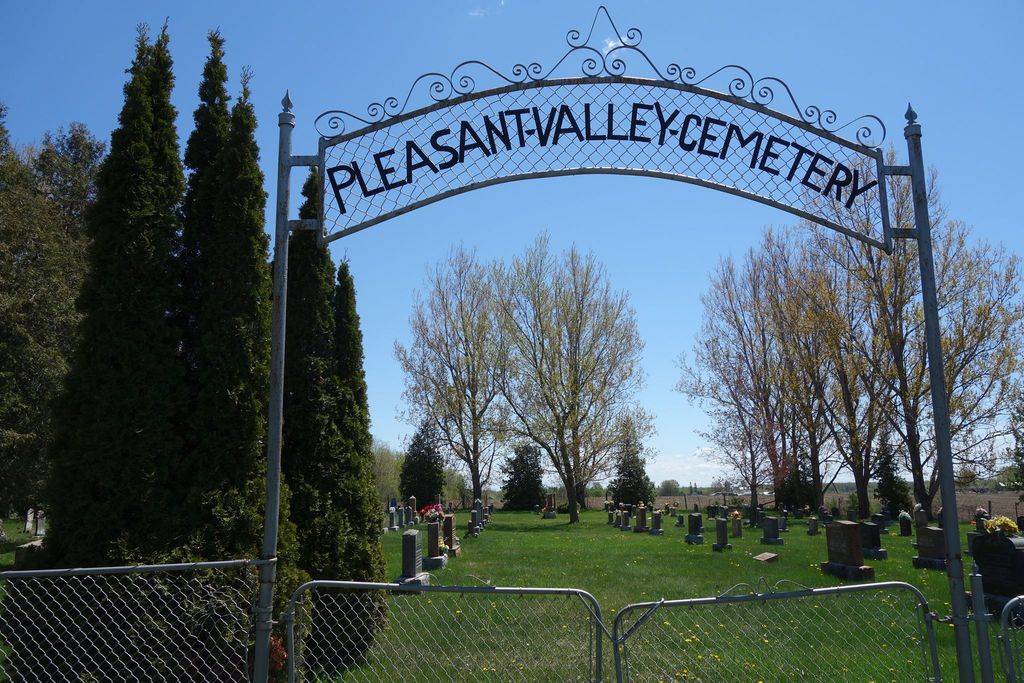
Pleasant Valley Cemetery, located in the historic Township of Osnabruck in present-day South Stormont, Ontario, is an important part of our community’s heritage. Its gravestones and burial records preserve the memory of generations of local families and provide valuable connections to the settlement and development of the surrounding area.
The South Stormont Cemetery Preservation Association is working with the cemetery’s trustees, volunteers and local historians to document its history, preserve its monuments and make historical information accessible to future generations.
A Cemetery with Deep Roots
The cemetery was already in use during the early nineteenth century. The oldest known surviving headstone dates to 1837, demonstrating that families of the Pleasant Valley area were burying their loved ones here well before the middle of the century.
The cemetery later became closely associated with St. Matthew’s Presbyterian Church, whose history reaches even further back.
St. Matthew’s was originally constructed at Woodlands in 1795. More than sixty years later, in December 1857, the church building was dismantled and moved to Pleasant Valley. According to local history, the building was transported by sleigh during the winter and reconstructed beside the small cemetery that was already established here.
For the next several decades, the church and cemetery formed an important centre of religious and community life for the surrounding farming families.
St. Matthew’s at Pleasant Valley.
The church remained at Pleasant Valley for more than seventy years. Generations of local residents gathered there for worship, baptisms, marriages, funerals and community occasions.
By the early twentieth century, changes in transportation, population and church organization were reshaping rural congregations throughout the region. In 1931, the St. Matthew’s church building and its sheds were sold and moved from the cemetery property.
Although the church itself disappeared from the site, the cemetery remained. The headstones and family plots became the lasting record of the people who had worshipped, farmed, raised families and built their lives in the Pleasant Valley community.
Community Stewardship.
Following the Second World War, responsibility for maintaining Pleasant Valley Cemetery was entrusted to members of the local Women’s Institute.
Their work represents an important chapter in the cemetery’s history. At a time when many small rural cemeteries faced uncertain futures, local volunteers ensured that Pleasant Valley continued to be cared for. This tradition of community stewardship eventually led to the establishment of a Board of Trustees to oversee the cemetery.
As the years passed and additional burial space was required, the cemetery expanded through the generosity of neighbouring landowners. Three local farmers donated portions of their property to help enlarge the cemetery, and an additional parcel was provided by the Township.
These contributions allowed Pleasant Valley Cemetery to continue serving local families while preserving the historic burial grounds that had existed for generations.
A Living Place of Remembrance.
Pleasant Valley Cemetery continues to be cared for with the assistance of dedicated community volunteers.
One of its longest-standing traditions is the annual Memorial Service, traditionally held on Father’s Day. Families, descendants and members of the surrounding community gather at the cemetery to remember those who have gone before them and to support the continuing care of this historic place.
The service is more than a ceremony. It reflects a tradition that has helped sustain Pleasant Valley Cemetery for generations: neighbours working together to remember their community’s past.
Preserving the Stones — Preserving the Stories.
The older northern portion of Pleasant Valley Cemetery contains many historic monuments and gravestones associated with families who lived in the former Township of Osnabruck.
Each monument represents more than a name and a date. Together, they form an irreplaceable historical record of the community.
Today, preservation efforts include documenting cemetery records, photographing and mapping gravesites, identifying historic monuments, improving public access to burial information, and working to preserve aging gravestones wherever possible.
Modern technology also provides an opportunity to connect historical cemetery records with photographs, maps and family information so that future generations can more easily discover the people whose stories are preserved here.
Connecting Past and Present.
Pleasant Valley Cemetery is more than a burial ground. It is a record of families, a record of a church community, and a record of the farming settlement that developed around Pleasant Valley.
It is also a reminder that local history is often preserved not only in books and archives, but in the names carved into stone across the landscape.
Through continued preservation, documentation and community involvement, Pleasant Valley Cemetery will remain a place where future generations can discover and remember the people who helped shape South Stormont.

